

1. The UAE fit-out sector has changed enormously over your two decades in it. What’s changed most about what clients expect from their workspaces and what hasn’t changed at all?
Over the past 20 years, I’ve seen a real shift in how clients think about their workplaces. In the past, the conversation was mainly about delivering a great-looking office on time and within budget. Those things still matter, of course, but today the workplace has become much more than that.
Clients now see their office as a tool for attracting and retaining talent, strengthening their culture, supporting employee wellbeing and expressing their brand. The expectations are much broader, and the workplace has become a strategic investment rather than simply a fit-out project.
Technology has also changed the way people work. Smart offices, hybrid working, seamless collaboration and flexible spaces have gone from being “nice-to-have” features to everyday expectations.
What hasn’t changed is the importance of trust. Clients still want confidence that you’ll deliver what you’ve promised—on time, within budget and to a high standard. No matter how much workplace design evolves, trust and reliability remain the foundation of every successful project.
2. You progressed from Lead Architect to Managing Director. At what point did you realise that technical expertise alone wasn’t enough to advance?
Early in my career, I thought being technically strong was the most important part of the job. As an architect, you naturally focus on solving design and technical challenges, and I believed that was what defined success.
That perspective changed as I took on more responsibility. Suddenly, I wasn’t just accountable for the design—I was responsible for people, business performance, client relationships and the long-term direction of the company.
I realized that leadership is rarely about having all the answers. It’s about making good decisions with imperfect information, bringing different people together, managing competing priorities and helping others succeed.
Today, a large part of my role is creating an environment where our teams can do their best work. Technical expertise gives you credibility, but leadership is ultimately about people, communication, trust and having a clear vision for where you’re taking the business.
3. On most fit-out projects, budget, deadline and quality eventually pull against each other. When they genuinely conflict, what gives first and how do you have that conversation with a client?
I don’t think the starting point should ever be deciding what to sacrifice. It should be understanding what matters most to the client.
Every project is different. Some clients simply can’t afford delays because it affects their business operations. Others place greater value on quality because the workplace represents their brand, while some have very firm budget constraints that can’t be exceeded.
Our role is to make those trade-offs clear. If shortening the programme increases cost, or reducing the budget affects materials or scope, we explain that openly and provide options rather than problems.
I’ve found that clients appreciate transparency. Even when the news isn’t ideal, having an honest conversation early allows everyone to make informed decisions together. In the end, collaboration almost always leads to a better outcome than trying to protect people from difficult conversations.
4. If someone spent a week shadowing you as Managing Director, what part of your role would surprise them most?
I think most people imagine a Managing Director spends the day making big strategic decisions from behind a desk. The reality is quite different.
A large part of my day is spent helping other people succeed—whether that’s supporting a client, mentoring a team member, resolving a project issue or removing obstacles that are slowing people down.
On any given day, I might move from discussing design details with our architects, to reviewing commercial decisions, meeting clients, supporting business development, looking at financial performance and planning for the future. Every day is different, which is one of the things I enjoy most.
The biggest surprise would probably be just how much of leadership comes down to communication. It’s less about giving directions and more about listening, aligning people around a common goal and making sure everyone has the clarity and confidence to perform at their best. When your team succeeds, the business succeeds.
5. What’s one piece of industry advice that you disagree with, and why?
One idea I’ve never agreed with is that the lowest price wins. It might win the tender, but it rarely delivers the best long-term value.
An office isn’t something you replace every year – it’s an investment that influences how people work, how they feel, and how a business performs for years to come. If the budget forces compromises that affect quality, durability or the employee experience, the client often ends up paying more in the long run. I’d rather be honest and say a project can’t be delivered to the right standard than promise something at a price that isn’t realistic.
Another misconception is that sustainability always comes at a premium. At Spacewell, we don’t see sustainable design as an optional add-on or something we only do when a client asks for it. We believe it’s simply the right way to build.
Whenever possible, we recommend products with strong sustainability credentials because they’re better for the environment and, just as importantly, healthier for the people using the space every day. We’ve also found that when sustainability is considered from the very beginning of the design process, it often leads to better long-term value through lower operating costs, improved efficiency and healthier workplaces.
6. Walk us through a recent Spacewell project you’re proud of. What did it teach you about where workplace design in the region is heading?
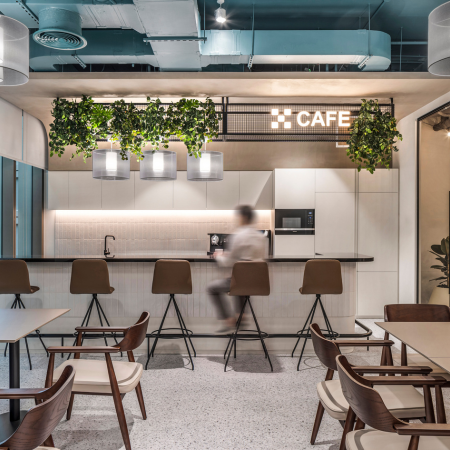
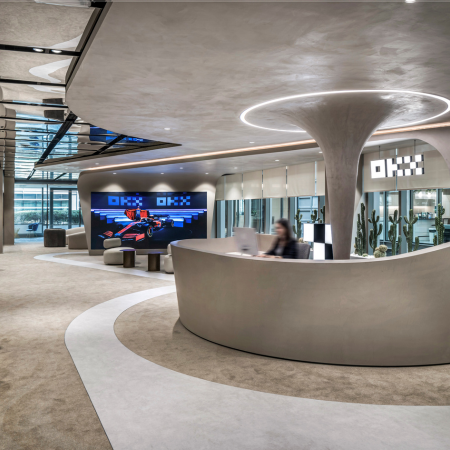
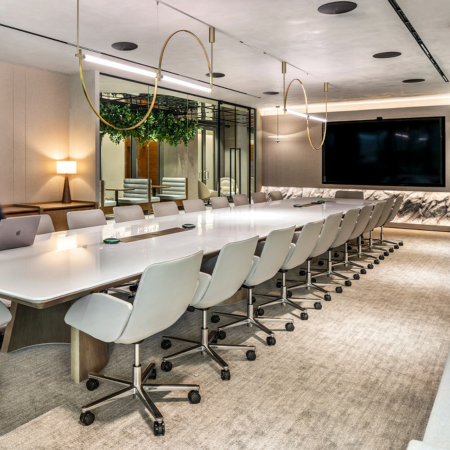
One project that stands out for me is OKX’s new headquarters in Dubai. It brought together everything that’s shaping the future of workplace design—innovation, sustainability, technology, speed of delivery and, above all, creating a great experience for the people who use the space every day.
I’m especially proud that the project achieved LEED Gold certification, which reflects the emphasis both the client and our team placed on creating a workplace that performs well not just aesthetically, but environmentally as well.
From day one, the brief was about much more than creating a beautiful office. OKX wanted a workplace that reflected its brand, encouraged collaboration, attracted top talent and gave employees a space where they genuinely wanted to come to work. Achieving that meant working closely with the client throughout the journey to balance ambitious design with programme, quality, commercial objectives and sustainability goals.
What this project really reinforced for me is that offices are becoming far more experience-driven. People expect workplaces to be flexible, technology-enabled and centred around wellbeing, while still supporting the company’s culture and the way its teams work. Flexibility is no longer a bonus—it’s simply expected.
The project also highlighted how much sustainability has evolved. Clients are no longer looking at it purely from a certification perspective. They’re thinking about operational efficiency, responsible material choices, healthier indoor environments and how their workplace will perform over the long term.
For us at Spacewell, that’s exactly where the industry is heading. The workplace of the future isn’t just an office—it’s a strategic asset that brings together great design, smart technology, sustainability and flexibility to help businesses attract talent, strengthen culture and support long-term growth.
Read it. Loved it. Now what?
More ideas, naturally. Explore more insights from WORKSPACE, or discover the latest thinking shaping hospitality and interior design from The Hotel Show and INDEX. Better yet, experience all three industries under one roof at Dubai World Trade Centre, 1–3 June 2027. One registration. Three shows. Zero difficult decisions.